


About Us
The research team's work focuses on identifying the molecular mechanisms of endometriosis pathogenesis, with particular emphasis on the role of the microenvironment. We investigate the processes underlying chronic inflammation, fibrosis, and impaired hormonal response, analyzing, among other things, the function of stromal cells and their impact on the course of the disease. Another important aspect of our work is assessing the impact of environmental factors, including microparticles and nanoparticles, on the cellular response from a nano- and immunotoxicological perspective.
The goal of our research is to identify biomarkers and signaling pathways that can improve the early detection of endometriosis. We utilize modern molecular and cell biology methodologies (cell cultures, gene and protein expression analysis, and immunofluorescence imaging), as well as omics techniques focused on the proteome and metabolome. A significant portion of our work involves the analysis of extracellular vesicles as important carriers of biological information. The team's priority is to translate basic research findings into solutions applicable to clinical practice.
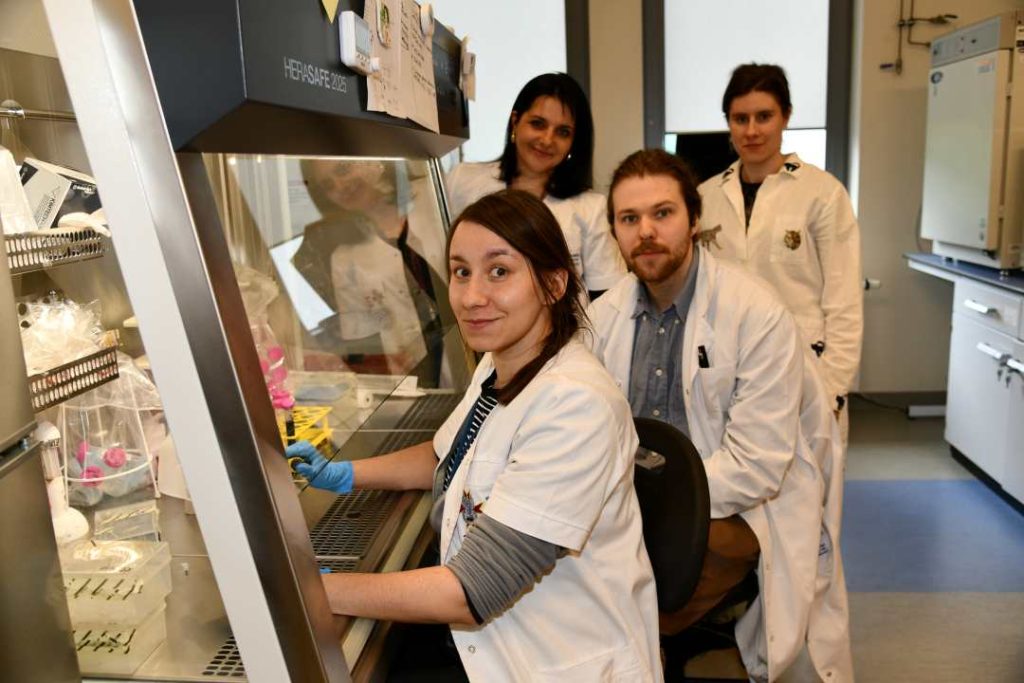
The team consists of:
- Dr. Hab. n. med. ino health engineer Aneta ŚCIEŻYŃSKA – HEAD
- prof. Ph.D. n. med. Anna LUTYŃSKA
- MSc Eng. Alexander CHODOWIEC
- Magdalena DEC, M.A.
- Dr. Krzysztof Łuszczyński
- Ludmila SZEWCZAK, M.A.
About
The research activities of our team focus on identifying molecular mechanisms underlying the pathogenesis of endometriosis, with a particular emphasis on the role of the tissue microenvironment. We investigate processes driving chronic inflammation, fibrosis, and dysregulated hormonal responses, including the function of stromal cells and their impact on disease course. An important aspect of our work is also the assessment of environmental factors, including micro- and nanoparticles, and their effects on cellular responses from a nano- and immunotoxicology perspective.
Our goal is to identify biomarkers and signaling pathways that may improve early detection of endometriosis. We employ advanced molecular and cellular biology methodologies (cell culture models, gene and protein expression analysis, immunofluorescence imaging), as well as omics approaches targeting the proteome and metabolome. An important part of our work involves the study of extracellular vesicles as key carriers of biological information. A major priority of the team is translating fundamental research findings into solutions with potential clinical applications.
The group consists of:
- Dr. Hab. n. med. ino health engineer Aneta ŚCIEŻYŃSKA – HEAD
- prof. Ph.D. n. med. Anna LUTYŃSKA
- MSc Eng. Alexander CHODOWIEC
- Magdalena DEC, M.A.
- Dr. Krzysztof Łuszczyński
- Ludmila SZEWCZAK, M.A.